 English




Choosing between a plastic shredder and a plastic crusher is an important decision when planning a plastic recycling process. Although both machines reduce plastic waste into smaller pieces, they differ in working principles, material handling capabilities, and typical applications. Understanding these differences helps manufacturers and recycling businesses select suitable plastic recycling equipment, improve processing efficiency, and control operating costs.
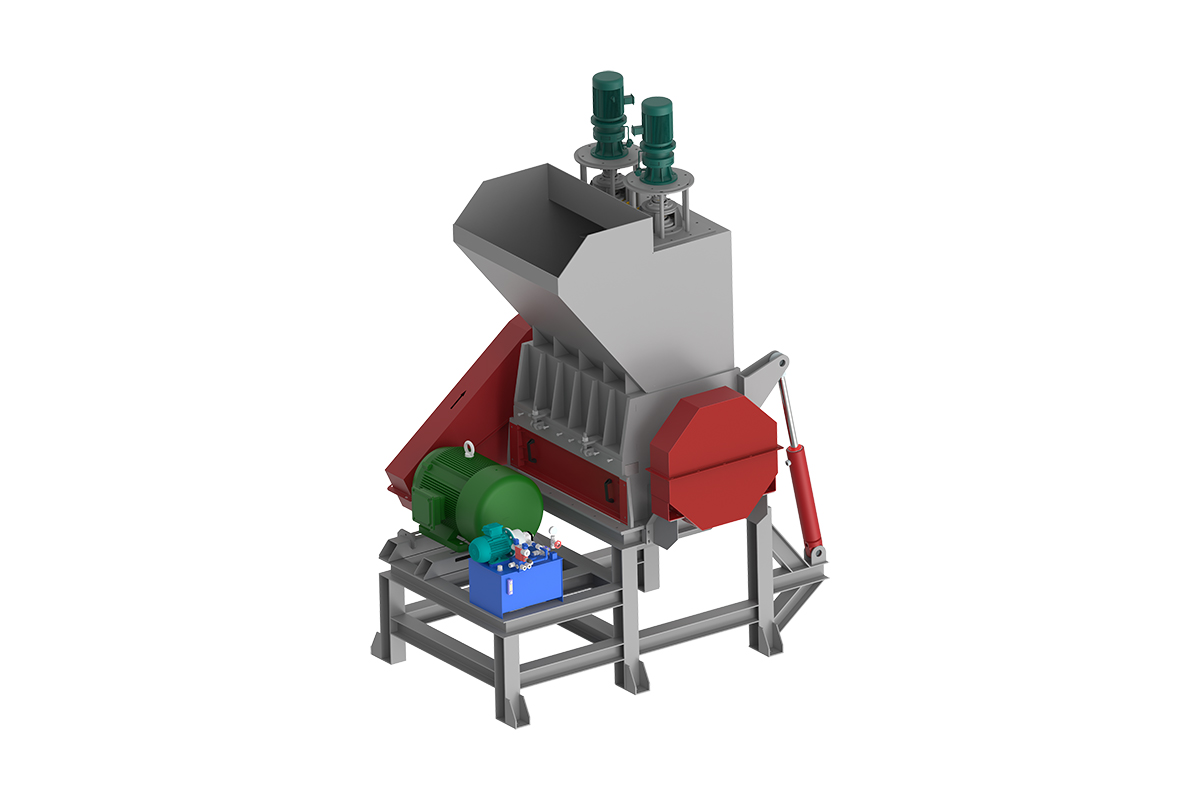
What Is a Plastic Shredder?
A plastic shredder is designed to reduce bulky, thick, or irregular plastic waste into smaller pieces. Depending on the machine design, it may use one or more rotating shafts equipped with cutting blades to tear or shear the material.
An industrial plastic shredder is commonly used for large plastic containers, pipes, thick-walled products, rejected molded parts, and other plastic waste that requires primary size reduction.
Typical applications include:
Processing large and bulky plastic waste
Reducing thick plastic parts and pipes
Pre-processing plastic waste before washing or crushing
Handling production scrap from plastic manufacturing facilities
What Is a Plastic Crusher?
A plastic crusher machine typically uses rotating and stationary blades to cut plastic into smaller granules or flakes. Many designs use a screen to help control the size of the discharged material.
Plastic crushers are commonly used for injection molding sprues, runners, rejected molded products, and smaller plastic scraps. They can also serve as a secondary size-reduction machine after shredding.
Typical applications include:
Crushing injection molding sprues and runners
Recycling rejected plastic products
Reducing plastic scrap to a more consistent size
Preparing plastic material for further recycling processes
Plastic Shredder vs. Plastic Crusher: Key Differences
| Comparison | Plastic Shredder | Plastic Crusher |
|---|---|---|
| Main function | Primary size reduction | Further size reduction |
| Working principle | Often uses tearing and shearing action | Usually cuts material with rotating and stationary blades |
| Suitable materials | Bulky, thick, or irregular plastic waste | Smaller scraps, sprues, runners, and molded parts |
| Output | Generally larger, irregular pieces | Often smaller pieces, depending on the screen and blade design |
| Selection priorities | Material dimensions, thickness, torque, and throughput | Required particle size, blade configuration, and processing capacity |
The exact output size, throughput, and power consumption depend on the machine configuration and the characteristics of the plastic being processed. Buyers should compare equipment specifications using their actual feedstock rather than relying on the machine name alone.
Which Machine Is Suitable for Different Plastic Materials?
1. Bulky Plastic Products
Large containers, thick plastic components, and bulky waste may require an industrial plastic shredder for initial size reduction. The machine should be selected according to the maximum material dimensions, wall thickness, and required processing capacity.
2. Injection Molding Sprues and Runners
A plastic crusher machine is often suitable for processing sprues, runners, and rejected molded parts. For in-house recycling, buyers should check whether the output can be reused in production and whether the particle size meets their material-handling requirements.
3. Plastic Films and Flexible Materials
Plastic films, bags, and other flexible materials may wrap around cutting components if the equipment is not designed for them. Buyers should confirm the material compatibility, blade configuration, feeding method, and anti-wrapping features before purchasing.
4. Mixed Plastic Waste
Mixed plastic waste may require sorting and different processing stages. The right plastic recycling equipment depends on the material composition, contamination level, and whether washing, drying, or pelletizing will follow size reduction.
Can a Plastic Shredder and Crusher Be Used Together?
Yes. Many plastic recycling lines combine a shredder and a crusher to handle different stages of size reduction. The shredder processes bulky waste first, while the crusher reduces the material further to meet downstream requirements.
Sorting: Separate materials by plastic type and remove unsuitable contaminants.
Shredding: Reduce bulky plastic waste into manageable pieces.
Crushing: Produce smaller pieces according to the next processing stage.
Washing and drying: Remove dirt and moisture when required.
Pelletizing: Convert suitable processed plastic into reusable pellets.
Not every recycling project needs both machines. For relatively small and uniform production scraps, a crusher alone may be sufficient. A material test and process assessment can help determine whether a combined plastic recycling line is necessary.
What Should Buyers Consider Before Purchasing?
Material type: Confirm the plastic resin, dimensions, thickness, and flexibility.
Processing capacity: Match the machine's practical throughput to your hourly or daily production target.
Output size: Define the required particle size and whether a screen is needed.
Blade design: Check blade material, replacement requirements, and suitability for the feedstock.
Power consumption: Compare motor power alongside actual operating conditions and expected throughput.
Maintenance: Ask about access to wear parts, blade sharpening, cleaning, and routine service.
Safety and installation: Confirm guarding, emergency stops, electrical requirements, and available floor space.
Supplier support: Evaluate technical guidance, spare-parts availability, and customization options.
Frequently Asked Questions
Q1: What is the main difference between a plastic shredder and a plastic crusher?
A plastic shredder is generally used for primary size reduction of bulky or irregular waste, while a plastic crusher is commonly used to cut plastic scraps into smaller pieces. The best choice depends on the feedstock and required output.
Q2: Can a plastic crusher process large plastic containers?
Some crushers can process certain containers, but suitability depends on their dimensions, wall thickness, and the machine's feeding opening and capacity. Large or thick-walled containers may need shredding first.
Q3: Which machine is better for injection molding scrap?
A plastic crusher is often suitable for sprues, runners, and smaller rejected molded parts. Larger or thicker parts may require a different machine configuration.
Q4: Do I need both a shredder and a crusher?
Not always. A crusher may be enough for small, uniform production scraps. Bulky waste or applications requiring multiple size-reduction stages may benefit from using both machines.
Q5: How can I choose the right plastic recycling equipment?
Evaluate the plastic type, material dimensions, required capacity, target output size, downstream process, maintenance needs, and total operating cost. Providing a sample or detailed material specifications helps a supplier recommend suitable equipment.
Looking for the Right Plastic Recycling Equipment?
Share your material type, processing capacity, and output requirements to identify a suitable plastic size reduction solution for your production or recycling line.
Request a Quote